International Variation in Inequality of Opportunity: Insights from 72 Countries

Research Square Working Paper (2026), with 17 co-authors,
Coordination: Francisco H. G. Ferreira, Vito Peragine, Paolo Brunori, and Pedro Salas-Rojo

Abstract
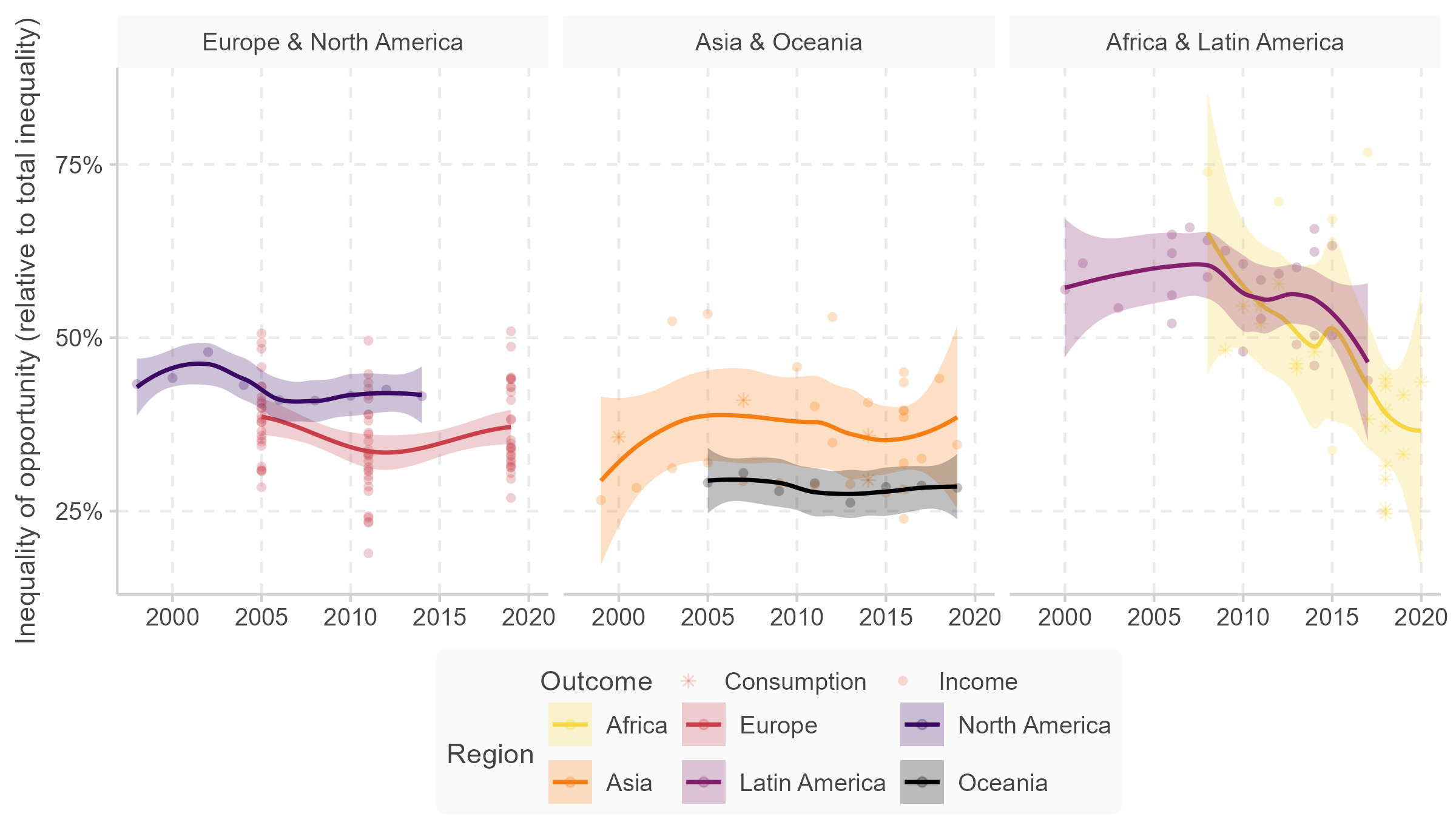
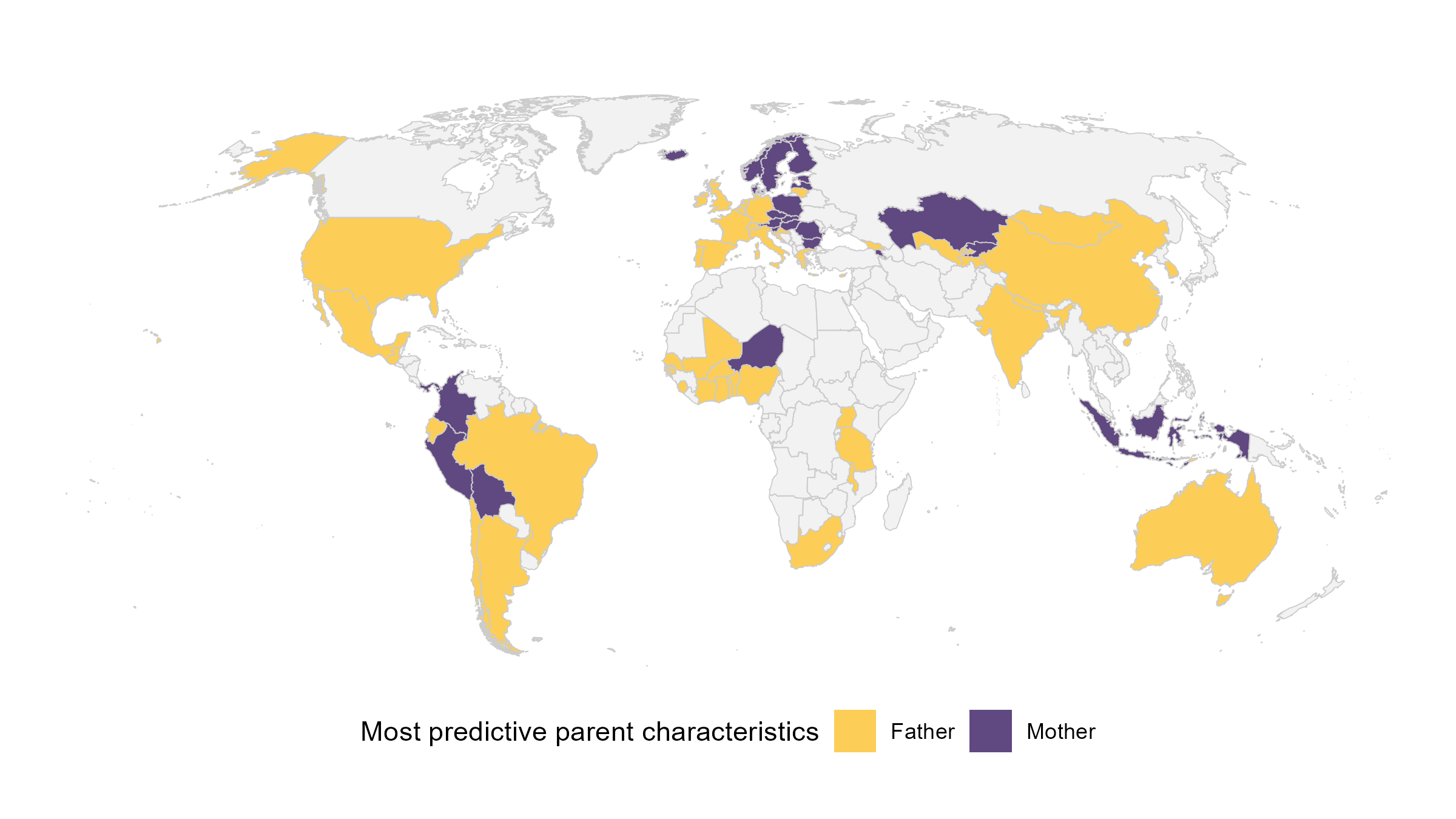
Inequality is considered particularly unfair when it stems from factors beyond individual control, such as gender, ethnicity, or family background, rather than from personal effort or choices. This is what inequality of opportunity captures. There is growing evidence that it matters both intrinsically and instrumentally: people object most strongly to this kind of inequality, and it can prevent talented individuals from disadvantaged backgrounds from reaching their full potential, holding back innovation and growth. Measuring its extent poses several challenges, and until now no systematic cross-country evidence has been put forward. We provide comparable estimates of inequality of opportunity for 72 countries, representing two-thirds of the world’s population, drawn from 196 household surveys. We show that, on average, factors beyond individual control account for 40.9% of total income inequality, ranging from 18.9% in Denmark to 76.7% in South Africa, with the United States among the most opportunity-unequal countries in the global North. These results offer the first global picture of how much of the gap between rich and poor is driven by inherited or predetermined factors, providing a shared basis for judging the fairness of economic outcomes worldwide. All estimates are available at www.geom.ecineq.org, along with data visualization tools.